


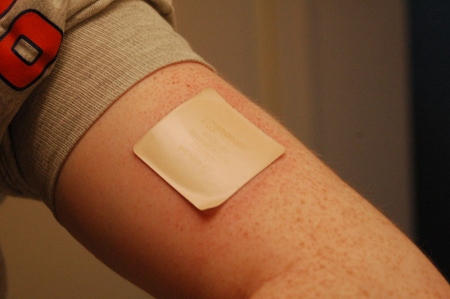
Nicotine withdrawal can cause dangerous agitation in intensive care patients. Researchers writing in BioMed Central's open access journal Critical Care found that, compared to non-smokers, agitated smokers were more likely to accidentally remove tubes and catheters, require supplemental sedative, analgesic or anti-psychotic medications, or need physical restraints.
Damien du Cheyron, from Caen University Hospital, France, worked with a team of researchers to study the effects of nicotine withdrawal in 44 smokers and 100 non-smokers in the hospital's intensive care unit, finding that agitation was twice as common in smokers than controls. He said, "Agitation was significantly more common in smokers than in non-smokers. These results suggest the need to be aware of nicotine withdrawal syndrome in critically ill patients, and support the need for improved strategies to prevent agitation or treat it earlier".
None of the smokers in the study were allowed nicotine replacement therapy (NRT) during the study period. According to du Cheyron, "NRT remains a controversial topic in intensive care and has been associated with mortality. Due to the serious consequences of withdrawal-induced agitation, including sedation and physical restraint, we suggest that the use of nicotine replacement therapy should be tested by a well-designed, randomized controlled clinical trial in the ICU setting".
Contact David Fewster - Worldwidehealth Editor
This form is intended for genuine enquiries only.