


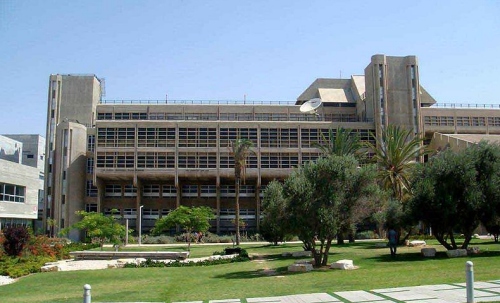
Beer-Sheva, ISRAEL - Researchers at Ben-Gurion University of the Negev are developing a new device that detects cancerous skin tumours, including melanomas that aren't visible to the naked eye.
During initial testing, the OSPI instrument (Optical Spectro-Polarimetric Imaging) revealed new textures of lesions that have never been seen before - including melanoma in patients who were diagnosed with various skin lesions and were awaiting surgery for their removal. The instrument diagnosed 73 types of lesions, some of them cancerous.
Dermatologists and plastic surgeons typically diagnose skin tumours by their appearance with the naked eye and only rarely using a dermatoscope - a magnifying tool that allows tumours to be examined in detail.
The OSPI biosensor uses safe, infrared wavelengths and LC devices to measure tumour characteristics, including contours and spread.
"This is an exciting preliminary development since the initial testing shows that we can now identify microscopic tumours in the biological layers of the skin," explains Prof. Abdulahim, who is head of the BGU Electro-Optical Unit in the Faculty of Engineering Sciences and is leading the research group. As we continue to develop the OSPI, we also see an opportunity to use this technology for detecting other types of cancerous growths."
Cancerous mole detection is usually done by looking for one or more telltale visible symptoms: if the mole is asymmetrical; if its outline is blurred or irregular; if it has multiple colours; if it is larger than five millimetres in diameter; and if stands up above the skin.
According to the American Cancer Society, more than one million cases of skin cancer are diagnosed yearly in the United States. Melanoma, the most serious type of skin cancer, will account for about 8,650 of the 11,590 deaths due to skin cancer in 2009.
Israel has also seen a rise in skin cancer cases in recent years.
According to the Health Ministry, one of every 39 men and one of every 50 women in Israel will be affected with melanoma in their lifetime.
Contact David Fewster - Worldwidehealth Editor
This form is intended for genuine enquiries only.