


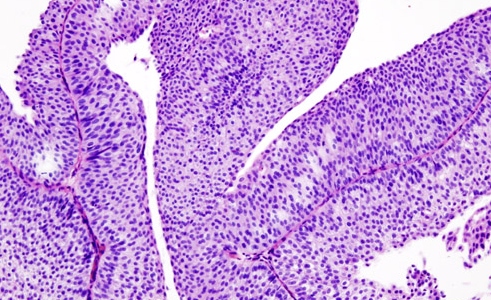
Copenhagen, Denmark - Researchers from the Danish Cancer Society and the Herlev University Hospital of Copenhagen have developed a novel assay to test for multiple tumor markers in bladder cancer. The related report by Serizawa et al, "Custom-designed MLPA using multiple short synthetic probes: application to methylation analysis of five promoter CpG islands in tumour and urine specimens from patients with bladder cancer," appears in the July 2010 issue of The Journal of Molecular Diagnostics.
Bladder cancer is the fourth most common type of cancer in men in the United States. Over 50,000 men are diagnosed with bladder cancer each year. Although early-stage superficial tumors can be shaved off or treated with BCG immunotherapy, late-stage patients with infiltrating tumor often require a cystectomy (removal of all or part of the bladder). Therefore, early diagnosis of bladder cancer is critical in maintaining lifestyle standards.
Methylation specific-multiplex ligation-dependent probe amplication (MS-MLPA) can be used to screen multiple target sequences simultaneously in a single reaction, allowing for rapid early screening of tumor markers. However, commercially available MS-MLPA kits are not available for many diseases, and custom probe design has been limited by problems of chemically synthesizing longer nucleotides. Researchers led by Dr. Per Guldberg of the Danish Cancer Society have now modified this assay by using multiple short synthetic probes to test for tumor markers in bladder cancer. They found that paired tumor and urine samples in most cases showed identical marker patterns, suggesting that this assay may be used for non-invasive diagnosis and disease monitoring.
Serizawa et al suggest that "the use of multiple short synthetic probes may provide a simple and cost-effective approach to custom-designed MLPA." In future studies, Dr. Guldberg's group will examine how "the same approach may be used for most other MLPA applications and thus provide the basis for a more widespread usage of the MLPA technology."
Contact David Fewster - Worldwidehealth Editor
This form is intended for genuine enquiries only.