


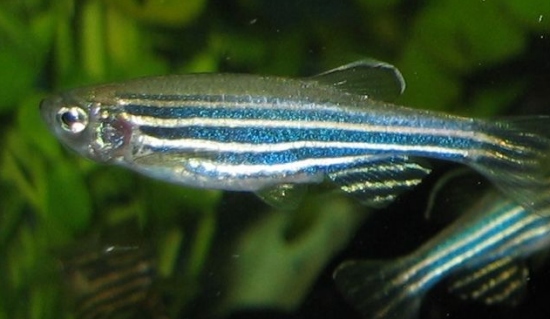
New Rochelle, NY - The zebra fish, a translucent fish often used as a model of human development and disease, offers unique advantages for studying the cause, growth, and spread of tumours using strategies and methods presented in the current "Cancer Biology" special issue of Zebra fish, a peer-reviewed journal published by Mary Ann Liebert, Inc. (www.liebertpub.com). The entire issue is available free online at www.liebertpub.com/zeb
Guest Editors Steven D. Leach, MD, the Paul K. Neumann Professor in Pancreatic Cancer and Professor of Surgery, Oncology and Cell Biology at Johns Hopkins University (Baltimore, MD) and A. Thomas Look, MD, Professor, Department of Paediatrics, Harvard Medical School, and Vice-Chair for Research Paediatric Oncology, Dana Farber Cancer Institute (Boston, MA), have compiled a comprehensive collection of papers that describe current approaches for modelling human cancer in zebra fish, studying tissue remodelling in zebra fish embryos, and understanding the genes, genetic control elements, and repair pathways involved in the development and metastasis of tumours.
A particular advantage of using zebra fish to study cancer biology is the ability to transplant human tumours into the fish using well-established methods. Authors Leonard Zon, PhD, and Alison Taylor, PhD, from Harvard Medical School and Children's Hospital Boston present the concepts and techniques relevant to zebra fish transplantation assays. They describe how tumour transplantation has been used to study leukaemia, rhabdomyosarcoma, and melanoma in the paper "Zebra fish Tumour Assays: The State of Transplantation."
The molecular basis for cancers affecting human germ cells is poorly understood, impeding efforts to identify more effective and targeted treatments. In the paper entitled "Identification of a Heritable Model of Testicular Germ Cell Tumour in the Zebra fish," authors Joanie Neumann, Jennifer Dhepard Dovey, Garvin Chandler, Liliana Carbajal, and James Amatruda, describe the development of a zebra fish model that carries a genetic mutation making the fish highly susceptible to the development of testicular tumours. This model system can be used to test new approaches to therapy for testicular cancer.
Jun Chen and Jinrong Peng, from Zhejian University (China), describe the use of transgenic zebra fish to understand the roles that different naturally occurring forms of the tumour suppressor gene p53 play in regulating cell cycle, metabolism, organ development, and cell aging and death. Their paper "p53 Isoform Δ113p53 in Zebra fish" discusses the potential use of this particular p53 isoform for characterizing factors in the p53 pathway and screening for novel cancer therapies.
Noting the "relative ease and low costs of transgenesis"-putting human genes into zebra fish-and the unique benefits of working with zebra fish, especially related to imaging, genetics, and transplantation, Dr. Leach predicts that, "Future zebra fish cancer research exploiting these fundamental advantages will be especially likely to generate novel insights not achievable using other model systems," in his Introduction to the issue entitled, "Pisces and Cancer: The Stars Align."
Contact David Fewster - Worldwidehealth Editor
This form is intended for genuine enquiries only.