


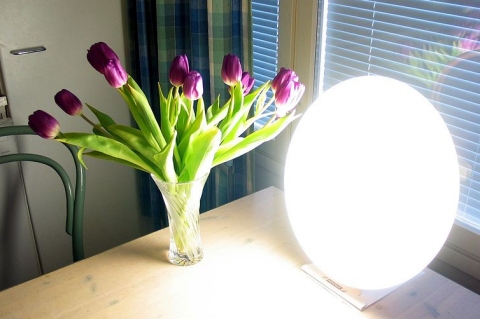
WESTCHESTER, USA - Bright light therapy has significant effects on sleep disturbances associated with combat-related post-traumatic stress disorder, according to a research abstract that was presented Monday, June 7, 2010, in San Antonio, Texas, at SLEEP 2010, the 24th annual meeting of the Associated Professional Sleep Societies LLC.
Results indicate that bright light therapy produced a significantly greater improvement than placebo in sleep disturbances specific to PTSD. Bright light therapy also produced a moderate improvement in PTSD symptoms and depression.
"Results of this ongoing study show significant effects of bright light on disruptive nocturnal behaviours associated with combat PTSD, as well as positive effects of bright light therapy on PTSD symptom severity," said study coordinator Shannon Cornelius, PhD, graduate research assistant for Dr. Shawn D. Youngstedt in the department of exercise science at the University of South Carolina in Columbia, S.C. "Because bright light therapy is a relatively simple, self-administered, inexpensive treatment with few side effects, these results are an important step to further establish the efficacy of bright light therapy as an alternative or adjunct treatment for combat-related PTSD."
The study involved 16 soldiers who returned to the U.S. with combat-related PTSD after serving in Operation Enduring Freedom or Operation Iraqi Freedom. Following a one-week baseline, participants were randomized to one of two four-week treatments. Eight soldiers received 10,000 lux of bright light therapy for 30 minutes each day. The other eight participants were assigned to the placebo group and received sham treatment with an inactivated negative ion generator. The Clinician-Administered PTSD Scale (CAPS-2) was completed at baseline and immediately following completion of the study. At weekly intervals, depression was assessed with the Beck Depression Inventory (BDI-II), and sleep quality was assessed with the Pittsburgh Sleep Quality Index (PSQI) with addendum for PTSD (PSQI-PTSD).
Cornelius noted that sleep disturbance is a commonly reported problem that can play both a precipitating and perpetuating role in PTSD, making it an important target for therapy.
"Disturbed sleep is known to interact with depression and anxiety in a vicious cycle," said Cornelius. "By reducing the severity and occurrence of sleep disturbances, it may be possible to reduce the severity of symptoms such as anxiety and depression in combat-related PTSD."
The study was supported by a U.S. Department of Veterans Affairs Merit Award.
The American Academy of Sleep Medicine reports that 70 to 90 percent of people with PTSD describe subjective sleep disturbance. Recurrent nightmares of the traumatic event represent one of the most problematic and enduring symptoms of PTSD. These nightmares may take the form of a realistic reliving of the traumatic event or depict only some of its elements.
Bright light therapy exposes your eyes to intense but safe amounts of light for a specific and regular length of time. Typically it involves exposure to up to 10,000 lux of light for scheduled periods of 20 minutes or more using a small light box.
In a 2007 study published in the journal BMC Psychiatry, Youngstedt reported that bright light exposure may have an anxiolytic effect. Three hours of exposure to 3,000 lux of bright light for three consecutive days reduced anxiety in a group of low-anxiety adults.
Contact David Fewster - Worldwidehealth Editor
This form is intended for genuine enquiries only.