


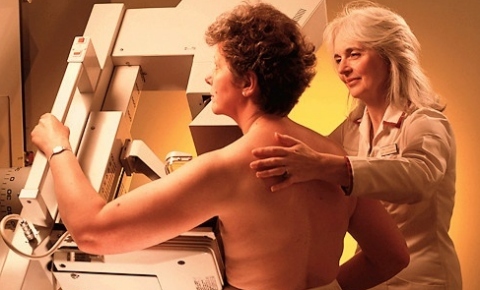
The reduced effectiveness of mammographic screening in women in their forties is primarily due to lower detectability instead of faster tumour growth rate, according to a study published online in The Journal of the National Cancer Institute.
Mammography screening outcomes, measured in terms of tumor size, lifetime gained and mortality, have typically been poorer in women in their forties than women in their fifties, partly because tumors of younger women tend to grow more quickly, so by the time they grow to a detectable size, they would have likely already been detected by a routine examination. Younger women also tend to have denser breast tissue, which can mask tumours, reducing their detectability on mammograms.
To investigate which factor-faster tumour growth rates, or reduced mammographic detectability-contributes to poorer mammography screening outcomes in younger women, Sylvia K. Plevritis of the Department of Radiology at the Stanford University School of Medicine, and colleagues, used a computer simulated model to estimate the relative effect of biology and technology on mammograms of women in their forties, compared to women in their fifties and sixties.
The researchers used the Breast Cancer Screening Simulator to create hypothetical screening scenarios whereby they could estimate the median tumor size detectable on a mammogram and the mean tumour growth rate in women aged 40-49 and 50-69.
The researchers concluded from their simulation model that lowered mammographic tumor detectability accounted for 79% and faster tumor volume doubling time accounted for 21% of the poorer sensitivity in mammography screening among younger women, compared with older women.
The authors write, "The age-specific differences in mammographic tumor detection contribute more than age-specific differences in tumor growth rates to the lowered performance of mammography screening in younger women."
One limitation of the analysis, according to the authors, is that it did not take into account that low mammographic tumor detectability could be considered a breast cancer risk factor. They write: "More research is needed to not only establish a better relationship between mammographic breast density and breast cancer risk but also understand the differences in tumor characteristics in dense vs non-dense breast tissue."
Contact David Fewster - Worldwidehealth Editor
This form is intended for genuine enquiries only.