


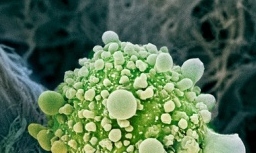
Tumours can arise from different cell types in the pancreas
Study results: MIT cancer biologists have identified a subpopulation of cells that can give rise to pancreatic cancer. They also found that tumours can form in other, more mature pancreatic cell types, but only when they are injured or inflamed, suggesting that pancreatic cancer can arise from different types of cells depending on the circumstances.
Why it matters: There are few good treatment options for pancreatic cancer, which kills an estimated 35,000 Americans per year - making it the country's fourth-leading cause of cancer death. Learning more about the origins of pancreatic cancer cells could help scientists develop better treatments and tools for early diagnosis.
"By the time pancreatic disease is typically diagnosed, it's already very advanced and non-curable. Our new findings can help scientists focus their drug development efforts and lead them to new ways to detect the disease in early stages," says Sharon Friedlander, a postdoctoral associate at MIT's David H. Koch Institute for Integrative Cancer Research and lead author of a paper describing the work in the November issue of Cancer Cell.
How they did it: The team found that in mice, tumours originate from a subpopulation of pancreatic cells that express a protein called pdx1. This protein plays a critical role in pancreas development and differentiation, a process of specialization that normally occurs during embryonic development but can also occur later in life. This suggests that under normal conditions, pancreatic cancer may arise from a type of adult stem cell that can differentiate into mature pancreatic cells, says Friedlander.
When the cancer-promoting gene K-ras, commonly activated in tumours, was turned on in the pdx1-expressing cells, they became cancerous. However, mature pancreatic cells, such as insulin-secreting cells, became cancerous only when they expressed K-ras and also suffered from chronic inflammation. Under these conditions, the insulin-secreting cells became another cell type, a condition that appears necessary before they can initiate pancreatic cancer.
Next steps: In future studies, the MIT researchers plan to use their mouse models to follow the molecular events that take place during pancreatic cancer development and identify potential targets for drug treatments and protein markers for early diagnosis. These new mouse models could also help researchers test potential pancreatic cancer treatments.
Contact David Fewster - Worldwidehealth Editor
This form is intended for genuine enquiries only.