


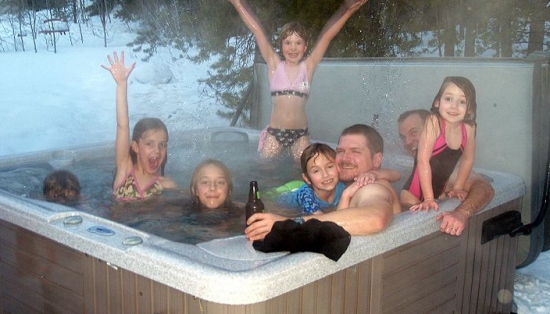
Though hot tubs, whirlpools and spas are widely used for relaxation and fun, they can pose serious risk for injury. Over the past two decades, as recreational use of hot tubs has increased, so has the number of injuries. A recent study conducted by the Centre for Injury Research and Policy of The Research Institute at Nationwide Children's Hospital found that from 1990-2007, the number of unintentional hot tub-related injuries increased by 160 percent, from approximately 2,500 to more than 6,600 injuries per year.
According to the study, published in the online issue of the American Journal of Preventive Medicine, 73 percent of the patients with hot tub-related injuries were older than 16 and approximately one half of all injuries resulted from slips and falls. Lacerations were the most commonly reported injuries (28 percent) and the lower extremities (27 percent) and the head (26 percent) were the most frequently injured body parts.
"While the majority of injuries occurred among patients older than 16, children are still at high risk for hot tub-related injuries," said study author Lara McKenzie, PhD, principal investigator at the Centre for Injury Research and Policy at Nationwide Children's Hospital. "Due to the differing mechanisms of injury and the potential severity of these injuries, the paediatric population deserves special attention."
Among children younger than 6 years, near-drowning was the most prevalent mechanism of injury, accounting for more than two-thirds of injuries, while children ages 6-12 were more likely to be injured by jumping and diving in or around a hot tub. Additionally, some of the most severe hot tub-related injuries associated with suction drains (such as entanglement, body entrapment and drowning) are predominately seen in children. To help prevent these serious injuries, legislation mandating certain standards for suction covers was passed in 2007.
"Although some steps have been taken to make hot tubs safer, increased prevention efforts are needed," said Dr. McKenzie, also a faculty member of The Ohio State University College of Medicine.
Recommendations to prevent hot tub-related injuries include placing slip resistant surfacing in and around the hot tub and limiting time and temperature of hot tub exposure to 10-15 minutes at no more than 104° F. Additionally, to prevent injuries to children, parents should keep hot tubs covered and locked when not in use, consider installing a fence or barrier around the area, set rules prohibiting jumping and diving, and comply with suction cover standards.
This is the first study to report national estimates, rates and trends of hot tub-related injuries for all ages treated in United States emergency departments. Data for this study were collected from the National Electronic Injury Surveillance System (NEISS), which is operated by the U.S. Consumer Product Safety Commission. The NEISS dataset provides information on consumer product-related and sports and recreation-related injuries treated in hospital emergency departments across the country.
Contact David Fewster - Worldwidehealth Editor
This form is intended for genuine enquiries only.