


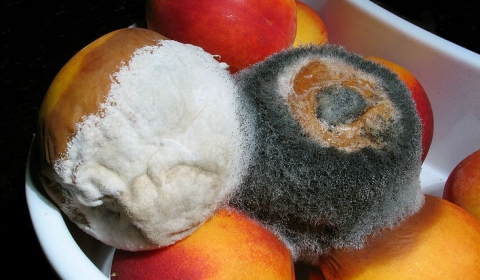
Exposure to high levels of fungus may increase the risk of severe asthma attacks among people with certain chitinase gene variants, according to a study from Harvard Medical School, Harvard Pilgrim Health Care Institute and Brigham and Women's Hospital.
The research was published online on the American Thoracic Society's journal Web site ahead of the print edition of the American Journal of Respiratory and Critical Care Medicine.
"We found that the interaction between environmental mold exposure and certain variants of chitinase genes were positively associated with severe asthma exacerbations requiring hospitalization," said lead researcher, Ann Wu, assistant professor at the at Harvard Medical School and Harvard Pilgrim Health Care Institute.
Chitinases break down chitin, a component in many fungi, and are induced during allergic inflammation. It has been suggested by past research that these could be biomarkers of inflammation. Moreover, certain variants of chitinase genes are known to be expressed more heavily in people with asthma.
The researchers used data from the Childhood Asthma Management Program, a multicenter trial that enrolled children between the ages of 5 and 12 with mild to moderate persistent asthma. Mold measures were taken in the subjects' homes at the beginning of the study, and homes were classified as having greater or less than 25,000 mold colonies per gram of household dust.
"This level of mold in dust is high for a residential environment. However, it is not likely to be easily recognized. Studies have shown that homes that have problems with dampness (e.g. visible mold on walls/ceilings, water collection in basement, etc.) have higher levels of mold, but there is no specific level that is currently accepted to 'cause' problems," said Dr. Wu.
Finally, using blood samples, the researchers genotyped all the single nucleotide polymorphisms-SNPs, or variants in which just a single "letter" of the DNA code in a given gene is different-of chitinase genes and a chitinase-like gene within the study population.
They then analyzed the appearance of different variations of chitinase genes with level of mold exposure and number of hospital visits from severe asthma exacerbations. They found that certain variants of the chitinase gene CHIT1, in conjunction with high mold exposure, were associated with increased risk of severe asthma attacks.
"Our results support increasing evidence that CHIT1, which is primarily expressed in the lung, plays an important role in the pathophysiology of asthma in the proper environmental context of exposure to chitin, which was approximated by mold levels," said Dr. Wu. "To our knowledge this was the first study to examine the effect of mold levels on the association of SNPs in the genes of both chitinases and chitinase-like proteins with asthma and allergy-related phenotypes."
Chitinases may play a role in future targets for asthma therapy. Inhibition of chitinase enzymatic activity has been demonstrated to prevent hyper-responsiveness and inflammation in mice. It is plausible, said Wu, that therapeutics designed to block chitinase enzyme activity may prevent hyper-responsiveness and inflammation related to asthma.
"Future research should focus on expanding and replicating these findings," she said. "The focus should be on mechanisms of chitinases and chitinase-like proteins in allergic inflammation. Additionally, finding other genes that may interact with mold exposure will also be important. We plan to find a population to replicate these findings. Additionally, we are preparing to perform a Genome-Wide Association Study in this same population to identify other genes that may interact with mold exposure."
Contact David Fewster - Worldwidehealth Editor
This form is intended for genuine enquiries only.