


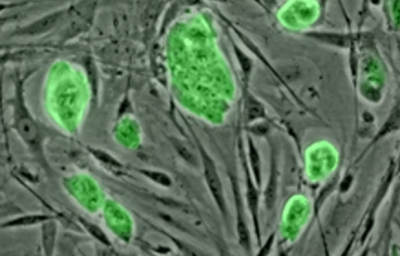
The goal of creating adult blood stem cells from human embryos to prepare a patient for tissue and organ transplant has been brought a step closer by research carried out at the MRC Molecular Haematology Unit at Oxford University.
Blood, or haematopoietic, stem cells (HSCs), are a type of adult stem cell that can produce several different types of blood cell, including those of the immune system that are involved in tissue rejection. Scientists have so far been unable to generate HSCs from embryonic stem cells, largely because they have not known how the embryo makes these cells.
By studying zebrafish embryos, the research team found BMP4, a protein involved in bone and cartilage development, to be the critical signal required to generate HSCs in the dorsal aorta, which is the chief artery that arises from the heart to distribute blood to the body.
Lead author Professor Roger Patient, from the MRC Molecular Haematology Unit, said: "The ability to make adult stem cells from embryonic stem cells would obviously benefit regenerative medicine because one of the characteristics of adult stem cells is that they are present in very small numbers and are resistant to expansion.
"There is substantial evidence for conservation of genetic mechanisms among vertebrates. Human embryos for example have been shown to express BMP4 under the dorsal aorta as seen in zebrafish. Zebrafish provide a large number of externally developing, and therefore manipulable, embryos that are transparent, allowing developmental processes to be observed in great detail."
One of the benefits, in the specific case of HSCs, is the potential for preparation of patients for transplantation. Another benefit is that numbers are always limited, even from bone marrow or umbilical cord. Therefore an alternative, potentially limitless source could be of great clinical benefit.
Contact David Fewster - Worldwidehealth Editor
This form is intended for genuine enquiries only.