


Loyola University Medical Centre is among the hospitals that enrolled patients in a landmark trial that compared traditional surgery with less-invasive stenting to clear dangerously clogged carotid arteries.
The study found that the safety and efficacy of both procedures are roughly equal. The nine-year Carotid Revascularization Endarterectomy vs. Stenting Trial is known as CREST. The trial, conducted throughout the United States and Canada, is one of the largest randomized stroke prevention trials ever.
"Our multidisciplinary team enrolled patients in both arms of this seminal and robust trial," said Dr. Jose Biller, one of the principal investigators at Loyola. "The data obtained at Loyola and other participating centres now will better inform doctors and patients about the relative benefits and risks of endarterectomy and stenting." Biller is chairman of the Department of Neurology at Loyola University Chicago Stritch School of Medicine. The other principal investigator at Loyola is Dr. Fred Leya, director of the cardiac catheterization lab.
Results were announced at the 2010 International Stroke Conference in San Antonio.
Carotid arteries on each side of the neck supply blood to the brain. As a patient ages, plaque can build up, causing the artery to stiffen and narrow. A patient can suffer a stroke if the artery becomes completely blocked. Or, bits of plaque can break off and travel to the brain and cause a mini stroke called a transient ischemic attack (TIA).
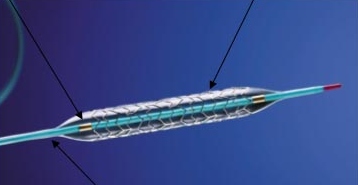
The traditional gold standard treatment is an endartectomy. A surgeon peels out the plaque deposit by removing the inner lining of the clogged artery. In the newer stenting procedure, a surgeon uses a catheter to deploy a stent (mesh tube). The stent expands inside the artery to increase blood flow.
CREST followed 2,502 participants, who were randomly assigned to receive an endarterectomy or a stenting. The overall safety and efficacy of the two procedures was largely the same. However, there were more heart attacks in the surgical group and more strokes in the stenting group.
"Both procedures are very safe and effective," said Dr. Mamdouh Bakhos, who performed endarterectomies in the trial. "Depending on a patient's age and medical condition, one procedure can have an advantage over the other. At Loyola, we offer both choices to patients." Bakhos is chairman of the Department of Thoracic and Cardiovascular Surgery.
Other Loyola physicians participating in the trial were Drs. Bernadette Aulivola and Peter Kalman, who perform endarterectomies; Drs. Robert Dieter and Fred Leya, who perform stenting procedures and neurologists Dr. Michael Schneck and Rima Dafer.
"The treatment strategy should be individualized to each patient, and take into consideration such factors as the patient's age and the type of blockage," Dieter said. "It also is very important to consider how much experience the hospital and the physician have in performing each procedure."
Contact David Fewster - Worldwidehealth Editor
This form is intended for genuine enquiries only.