


Therapies that can keep us younger longer might also push back the clock on Alzheimer's disease, suggests a new study of mice in the current issue of the journal Cell.
"There's something about being youthful that protects us from Alzheimer's disease," said Andrew Dillin of The Salk Institute for Biological Studies. "People say that if you live long enough, you get Alzheimer's. But if that were true, mice that live longer should get the disease at the same rate. That's not what we found."
The researchers show that mice carrying human genes that cause them to develop Alzheimer's can be protected from that disease by turning down a pathway that is well known for its effects on aging. Surprisingly, the brains of the mice who were spared the cognitive, inflammatory and neural effects of Alzheimer's by reducing the so-called insulin/IGF signalling pathway were still riddled with amyloid plaques. However, those plaques were more tightly packed into larger clusters than they would otherwise have been.
"We expected to see less plaque in the protected mice," Dillin said. "Instead we saw the same number of plaques, but there was a qualitative difference in how they looked. They were condensed so that they took up less area in the brain." Those larger structures are apparently also less toxic.
The new findings confirm an earlier report by the Salk team in worms engineered to produce the human beta amyloid protein in their body wall muscles.
Dillin said they don't yet completely understand how the lowered IGF signal protects the mice, but the pathway is known to negatively control two transcription factors (FOXO and HSF-1). Those transcription factors in turn control other genes encoding molecular chaperones, whose job it is to protect all of a cell's proteins.
"To maintain youth, you have to protect the proteome, not just the genome," he said. That may be particularly critical in long-lived cells like neurons, heart and muscle, which do not often divide and replace themselves. He points out that those who are genetically predisposed to develop early onset Alzheimer's carry the gene their whole lives, but don't develop the disease until they reach their 50s.
He thinks that youth-extending drugs aimed at increasing the activity of the FOXO and HSF-1 transcription factors may be the better bet for staving off Alzheimer's disease since the IGF pathway plays so many varied roles in the body. He plans to test in further studies whether a similar mechanism can also yield benefits for other neurodegenerative diseases that tend to come on with age, including Parkinson's and Huntington's diseases.
Dillin emphasizes that the ultimate aim is to improve the quality of life, not the quantity. "The goal is not to make people live to be 250 years old; it is to delay the onset of sickness," he said. "I want to find ways to extend health span, not necessarily life span."
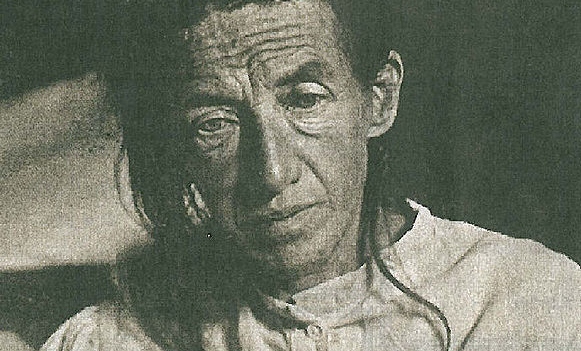
Photo: Auguste Deter. Alois Alzheimer's patient in November 1901 first described patient with Alzheimer's disease.
Contact David Fewster - Worldwidehealth Editor
This form is intended for genuine enquiries only.