


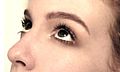
WHAT RHINOPLASTY IS
As you might already know, rhinoplasty is surgery performed on your nose. It may be required for any of three reasons:
· To enhance your appearance
· To correct malformation stemming from illness, accident or birth
· To improve your breathing functionality
With a rhinoplasty, you can increase or decrease the size of your nose, change its shape, alter the angle of the nose's tip or change the distance between your upper lip and your nose.
It is important that you think of having the procedure done only after you have stopped growing, which means after your 15th birthday if you are female or after your 17th birthday if you are male.
TYPES OF RHINOPLASTY
There are two types: closed and open. In closed rhinoplasty, all the surgery is performed inside your nostrils. No scar will be visible and recovery is fast. However, in some cases your surgeon might not be able to access the target areas from inside your nostrils and closed rhinoplasty will not be viable.
In open rhinoplasty, your surgeon will make additional incisions on the outside of your nose, on the bridge. There will of course be a scar, usually at the bottom front of the fleshy partition between the nostrils. If your surgeon has a good skill level, this scar will not be visible from usual viewing distances.
RHINOPLASTY COSTS AND FINANCING
It can cost between $3,000 and $20,000 depending on the complexity of the operation, the quality of the operating room and the ‘brand value' of this room and your surgeon. The typical cost is $4,500.
If you are planning a rhinoplasty for cosmetic reasons, be advised that in all probability your insurance policy will not cover it. However, if it is done for one of the other reasons mentioned at the beginning of this article, there is a good chance your policy will include it. If your insurer says it is covered, be sure to get pre-authorization from them before the operation.
If your insurance policy does not cover it and you need external financing, there are companies specialized in medical loans that you could approach. For a current list, go to one of the popular search engines and search for "patient financing".
FINDING A RHINOPLASTY SURGEON AND CLINIC
Your life depends on the surgeon and the facility at which you plan to have your rhinoplasty (sorry for being blunt, but it's important).
Your surgeon should be certified by the American Board of Plastic Surgery and rhinoplasty should be one of his/her specializations.
To find such a surgeon in your area, go to the Board's website. Then go to your State Medical Board and find out whether there has been any disciplinary action taken against him/her (a sure sign of incompetence).
You need to further verify the skill of your potential surgeon by finding out whether hospitals think she's acceptable. Basically you need to find out if she has "operating privileges" for rhinoplasty in an accredited hospital. The doctor's receptionist is a good source for this information, which should be double-checked with the concerned hospital.
If your surgery is going to be in a hospital, it behooves you to check out the credentials of the hospital before agreeing to go there. Do this with a credible hospital Directory.
When all is said and done, make sure you can be rapidly admitted to a nearby quality hospital in the event of unforeseen complications.
BEFORE, DURING AND AFTER THE SURGERY
Before: Three weeks before your surgery, stop smoking, aspirin and other anti-inflammatory drugs. Ask your surgeon for further routine preparatory steps.
During: Your surgeon will use a chisel or rasp to reshape your bone and cartilage. S/he will also add this cartilage back if necessary. The operation typically takes from one to two hours; you will be quite comfortable because of the anesthesia. Your surgeon will finish by packing your nose and affixing an external splint.
After: Your surgeon will give you painkillers to help you cope with the natural swelling and bruising of your nose. She will remove the packing in 24 hours and the splint in a week. S/he will also ask you to apply ice packs as required. Although you can typically return to work in 1 - 3 weeks, the swelling and bruising will take six weeks to subside for closed rhinoplasty and up to six months for open rhinoplasty.
POSSIBLE COMPLICATIONS FROM RHINOPLASTY
If you have followed the earlier guidelines about careful choice of your surgeon, anesthetist and operating facility, there is only a 1.7% - 5% chance of life-threatening complications (S.Valentine Fernandes on emedicine.com). Overall rates for complications are 4% - 18.8% (same author).
CONCLUSION
Follow all these guidelines carefully and your rhinoplasty will be near 100% perfect. Good luck with your surgery!
Contact Lucky Balaraman
This form is intended for genuine enquiries only.