


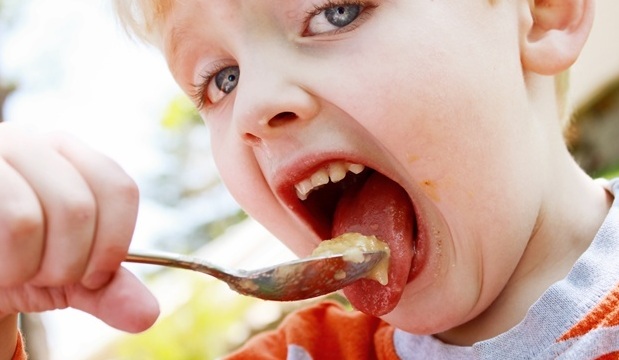
One in eight parents consider their child to be overweight, a study revealed yesterday.
Researchers found a startling number of mums and dads believe their son or daughter is obese or severely overweight, with the majority blaming it on their unhealthy diet.
Sugary snacks, taking part in little or no exercise and believing ‘it's in the genes' were also excuses put forward to explain why millions of kids are out of shape.
But 85 per cent said they were to blame for their child's size and half wished they were more active with their kids.
The report into 2,000 parents' attitudes towards their offspring's well-being was commissioned by Benenden Healthcare Society.
Yesterday, Paul Keenan, External Affairs Manager for Benenden, said: ‘Parents are clearly recognising the challenge they face in stopping the rise of a generation of overweight children, but they are unsure of the ways in which they can prevent childhood obesity.'
‘Parents and children face many daily pressures such as food advertising and the popularity of computer games and it can often be hard to not slip into bad eating habits and lack of exercise.'
‘There should not be a single avenue of blame and it will take a holistic approach to tackle this important issue.'
‘Parents can start with a positive attitude to health and wellbeing, which involves all the family. Benenden Healthcare encourages good health and wellbeing by educating its members via regular communications on health issues with members and a dedicated section on our website'
‘A great source of information about staying healthy and eating well can also be found on the NHS's Change 4 Life website. We support Change 4 Life and would certainly recommend parents and children to take a look and download lots of healthy advice. It's never too late to start.'
The Benenden Healthcare study quizzed parents on their attitudes and behaviours towards the health of children aged between eight and sixteen.
It found three per cent of parents thought their youngsters were severely overweight, nine per cent were classed as overweight and one in six were ‘chubby'.
A quarter said their child's weight was down to their poor diet, while one in five blamed sugary snacks and one in five also said their children did not exercise. One in twenty said it was because they were ‘a big family'.
One in ten said their child is larger than other kids in their class and just 58 per cent of parents polled said their child was a ‘normal size'.
Sister Jane Wallace of Benenden Hospital who specialises in obesity issues said: ‘The Obesity epidemic currently raging has presented parents with a whole new set of challenges.'
‘There has been far more caution with children of this generation in terms of not allowing them freedom to walk and cycle to school.'
‘There is also wider availability of fast food and fizzy drinks which are cunningly designed to not only be delicious but also addictive and many of these temptations are on sale en-route to secondary school where parents have no control whatsoever on what the child is consuming.'
‘Children are also more sedentary and adept at entertaining themselves indoors with computer games, rather than playing outdoors.'
‘By 2050, it's predicted that 25% of children will be obese: that is a body mass index of over 30. Genetics are often mentioned in the discussion about obesity and are considered to be a factor but it is not a helpful one.'
‘This epidemic is becoming far too serious and it is perhaps time for legislation to be considered in order to tackle the problem that our society has created.'
The report also highlighted a whole raft of reasons why the nation's parents have cause for concern.
One in six said they have no idea what their children are up to and what they eat during school time, while 44 per cent know they eat junk food on their way to and from school.
A third of adults said their kids prefer playing computer games instead of getting fresh air, while a third said they have ‘no interest in exercise'.
One in six said they give in to their kids' nagging because they're forever saying ‘I'm hungry' and half are guilty of giving them junk food with crisps, chips and chocolate favoured in UK households.
One in ten do so ‘for an easy life'.
It also emerged just 55 per cent of parents encourage exercise and six in ten don't bother ensuring their children eat their five a day portions of fruit and veg.
Of those parents who aren't active with their kids as much as they would like, 49 per cent said they were often too tired by the time they walk through the front door after work.
Having little or no time, household chores and cooking dinner were also cited as reasons why they didn't play with their kids. 13 per cent said it was easier to watch TV or do something from the comfort of the sofa.
One in twenty said it was the responsibility of schools to encourage children to exercise.
And of those who consider their child to be overweight, four in ten don't see this changing in the near future and 46 per cent went as far as to say they were concerned for their child's future health.
It also emerged that two thirds of youngsters are aware of their weight or figure - with half concerned they are ‘too fat', while one in five reckon they are too short for their age.
A third of parents said they are worried that by giving their children sweets they will turn out fat.
And 35 per cent of parents polled classed themselves as ‘overweight' or ‘chubby' and 62 per cent of these are worried their children will turn out the same as them.
Contact Global News, PR and Survey Specialists
This form is intended for genuine enquiries only.