


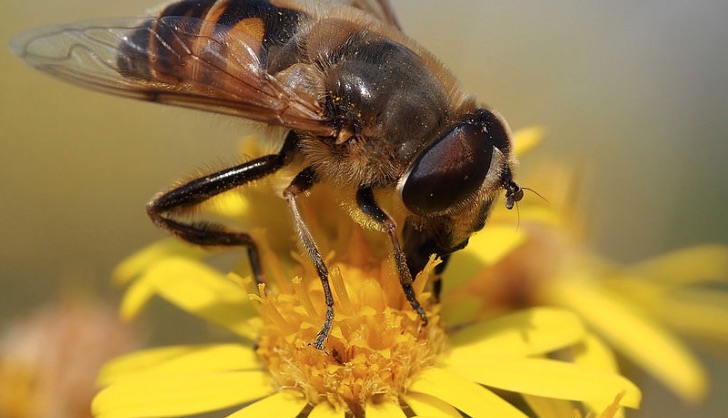
This common Ragwort plant also known by names such as; Stagger-Wort, Stammer-Wort, Serum, St. James Wort and Ragweed, is generally considered to be biennial, it has many large long dark green ragged leaves that grow from a type of square looking blackish purple very strong stalks, that can grow up to three or four foot in height, its large bright yellow flowers have a prominent downy seed.
Ragwort is native to the United Kingdom and provides a home and food source to at least 77 different species of insects, mainly consisting of hover-flies, moths, butterflies and bees; however because of a variety of different alkaloids (naturally chemical compounds that contain basic nitrogen atoms) contained in this plant, it is actually poisonous to certain animals, in particular with horses and cattle, usually these animals will not eat it fresh from the field because of its bitter taste, but sometimes it is eaten by mistake when dried ragwort is found in a bale of hay.
Apparently there are some medicinal virtues that can come from this hardy plant that can be helpful to man, if a careful decoction is prepared as a herb, as a mouth wash, to treat the mouth as affected with both ulcers and/or sores, such a remedy has been known to reduce swellings in the mouth, but only used as a mouth wash, not to swallow. There have also been remedies known to be made from this plant to support the recovery from sciatica and pain of the hips.
Contact Hilary Heald Williams
This form is intended for genuine enquiries only.